Compound Interest: The Most Powerful Force in Wealth Building
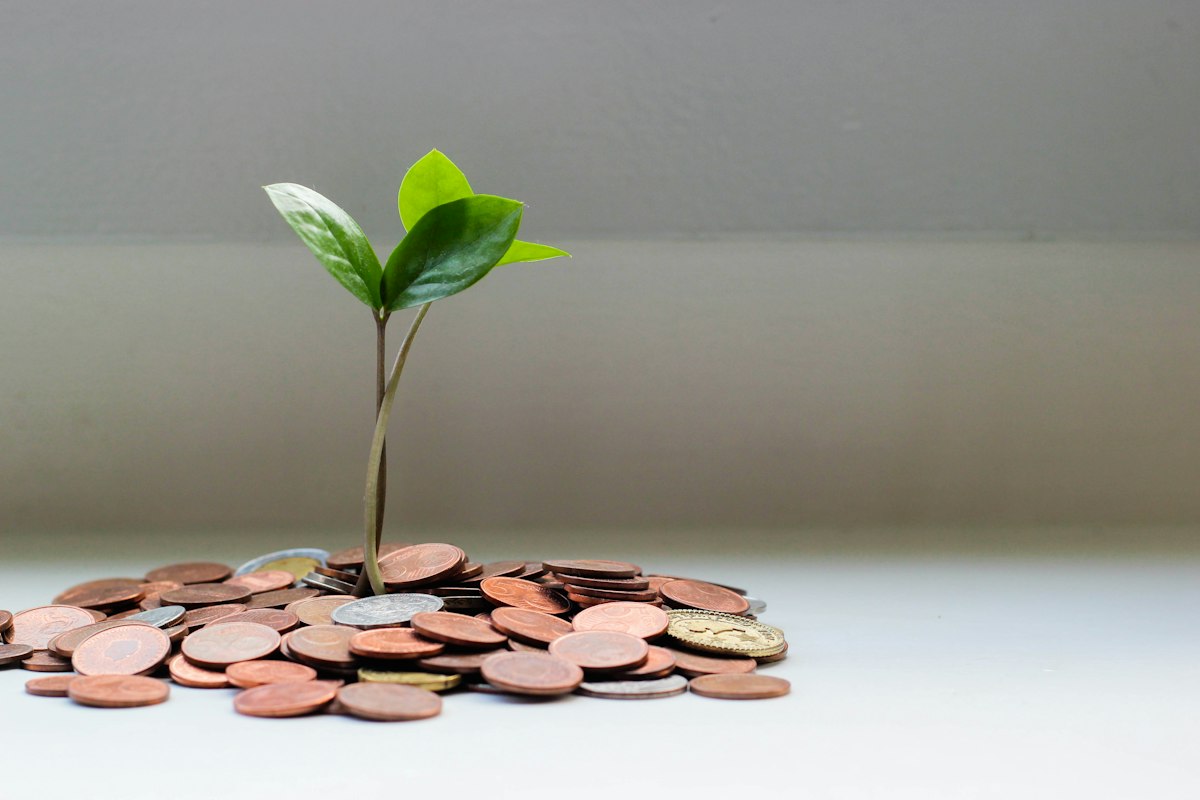
Albert Einstein allegedly called compound interest the eighth wonder of the world. Whether he actually said it or not, the statement captures an essential truth about wealth building: compound growth creates outcomes that seem almost magical to those who don't understand it. A single dollar invested at age 20 grows to $76 at retirement by age 65 at 7% annual returns. That same dollar invested at 40 grows to only $6. That 25-year difference in timing transforms $1 into $76 versus $6—a twelve-fold difference from a 25-year head start. This is not magic; it's mathematics.
Understanding compound interest fundamentally changes how you view investing, saving, and the role of time in wealth building. Suddenly, starting to invest at 25 rather than 35 isn't a minor adjustment—it's the difference between building wealth that lasts and working until you're too old to enjoy freedom. This guide explains exactly how compound interest works, the factors that accelerate or decelerate its effects, and why starting now matters more than any other single decision you'll make about your finances.
How Compound Interest Actually Works
Most people understand that investments grow over time, but the specific mechanics of compounding are often misunderstood.
The Basic Mechanism
Simple interest calculates returns only on your original principal. If you invest $1,000 at 10% simple interest, you earn $100 annually regardless of how long you hold the investment. Compound interest calculates returns on your principal plus accumulated earnings. The same $1,000 at 10% compound interest earns $100 in year one, then $110 in year two (10% of $1,100), then $121 in year three (10% of $1,210). Each year's gains generate their own gains in subsequent years.
This difference seems minor in early years but becomes staggering over decades. Over 30 years, simple interest on $1,000 at 10% yields $4,000 total. Compound interest yields $17,450. The compound approach generates more than four times the returns of simple interest purely because of the compounding mechanism.
The Rule of 72
The Rule of 72 provides a handy mental shortcut for estimating compound growth: divide 72 by your annual return rate to estimate how many years it takes your money to double. At 7% returns, money doubles approximately every 10.3 years. At 10% returns, it doubles every 7.2 years. This means $10,000 becomes $20,000 in about 10 years at 7%, $40,000 in about 20 years, $80,000 in about 30 years, and $160,000 in about 40 years. Simple doubling multiplies your money eight times over a 40-year period at 7% returns.

The Time Factor: Why Starting Early Matters So Much
The dramatic impact of time on compound growth represents the most important insight in all of personal finance.
The 25-Year Head Start Advantage
Consider two investors: one starts investing $300 monthly at age 25, the other starts the same $300 monthly at age 35. Both earn 7% annual returns. By age 65, the early starter has contributed $144,000 and accumulated approximately $1.1 million. The later starter contributed $108,000 and accumulated approximately $500,000. The 10-year-late starter contributed $36,000 less but accumulated $600,000 less. That decade of delay cost more than six times the total contributions sacrificed.
Catching Up Is Extremely Difficult
Someone who starts at 35 would need to invest approximately $600 monthly to catch up to someone who started at 25 with $300—twice the monthly contribution for a decade of procrastination. This is why financial advisors universally recommend starting as early as possible, even with small amounts. The worst thing you can do is assume you need to wait until you have more money to invest.
Factors That Accelerate Compounding
While time is the primary driver of compound growth, several factors can accelerate or decelerate the process.
Return Rate Impact
The difference between 5% and 7% annual returns seems minor—only 2 percentage points. But over 40 years, $300 monthly at 5% grows to approximately $580,000 while at 7% it grows to approximately $1.1 million. The modest-sounding 2% annual return difference approximately doubles your terminal wealth over 40 years. This is why keeping investment fees low matters so much—a 1% annual fee effectively reduces your long-term return by 20-30% over typical career timeframes.
Contribution Consistency
Regular contributions dramatically accelerate compounding because each new contribution begins its own compounding timeline. Dollar-cost averaging—investing fixed amounts at fixed intervals regardless of market conditions—provides this consistency while reducing the risk of investing at the worst possible moments. Investors who maintain consistent contributions throughout market ups and downs accumulate more than those who invest sporadically or try to time the market.

The Dark Side: Compound Interest Works Against You Too
Understanding that compound interest operates in both directions prevents costly mistakes.
Debt Compounds Against You
Credit card debt at 20% interest compounds against you just as investment returns compound for you. A $10,000 credit card balance that only makes minimum payments ($250 monthly on a 20% card) never truly gets paid off—it generates interest forever. The debt compounds in the same way investments compound, but you're on the losing side. This is why high-interest debt elimination should be a priority: every dollar paid against 20% debt provides a guaranteed 20% return that no investment can reliably match.
Inflation's Hidden Compounding
Inflation compounds against the purchasing power of your savings at approximately 3% historically. This means you need approximately $1.34 in 10 years to have the same purchasing power as $1 today. Investments must earn more than inflation to provide genuine wealth preservation. This doesn't mean avoiding savings or investments—it means understanding that the goal is growth above inflation, not just accumulation of nominal dollars.
Maximizing Compound Growth in Your Life
Understanding compound growth enables specific decisions that leverage this powerful force.
Start Immediately, Start Now
The most important decision you can make about compounding is starting now, not waiting for the "right time" or the "right amount." $100 invested today begins compounding immediately; $100 invested next year loses a year of compounding that can never be recovered. The difference between starting today versus next year versus five years from now is dramatic and permanent.
Maximize Tax-Advantaged Accounts
Tax-advantaged retirement accounts enable compounding on pre-tax dollars (traditional) or tax-free growth (Roth). In a taxable account, you owe annual taxes on dividends and capital gains distributions, which reduces the effective compounding rate. In tax-advantaged accounts, the full returns compound without annual tax drag, dramatically accelerating accumulation over decades.
Avoid Interruptions
Compound growth requires continuity to work its magic. Interrupting compounding through early withdrawals, market timing during downturns, or raiding retirement accounts for non-emergencies derails the exponential process. The investor who stays invested through market crashes and continues contributions builds far more wealth than one who panic-sells or makes sporadic contributions. Patience is the investor's greatest virtue.
Conclusion
Compound interest is indeed a wonder—the mathematical engine that transforms small, consistent actions into life-changing wealth. The numbers are clear and undeniable: starting early, earning reasonable returns, maintaining consistency, and avoiding debt that compounds against you will create financial outcomes that seem impossible to those who don't understand the math. You now understand it. The question is whether you'll act on this knowledge. Every day you delay costs you a day of compounding that you'll never recover. Start today, with whatever amount you can manage, and let the eighth wonder of the world work on your behalf.